
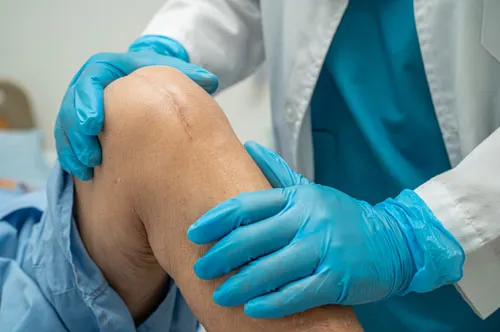
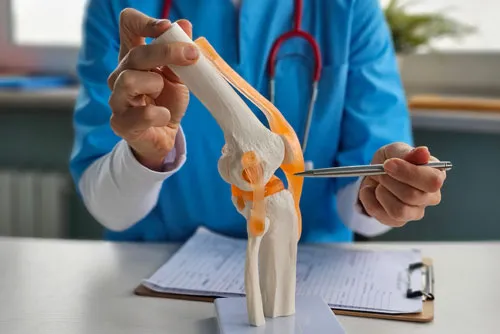
Consult Dr Seng if conservative treatment no longer provides adequare relief for your knee pain.

MBBS (Singapore), MRCS (Edinburgh), MMed (Orth), FRCS (Edinburgh)
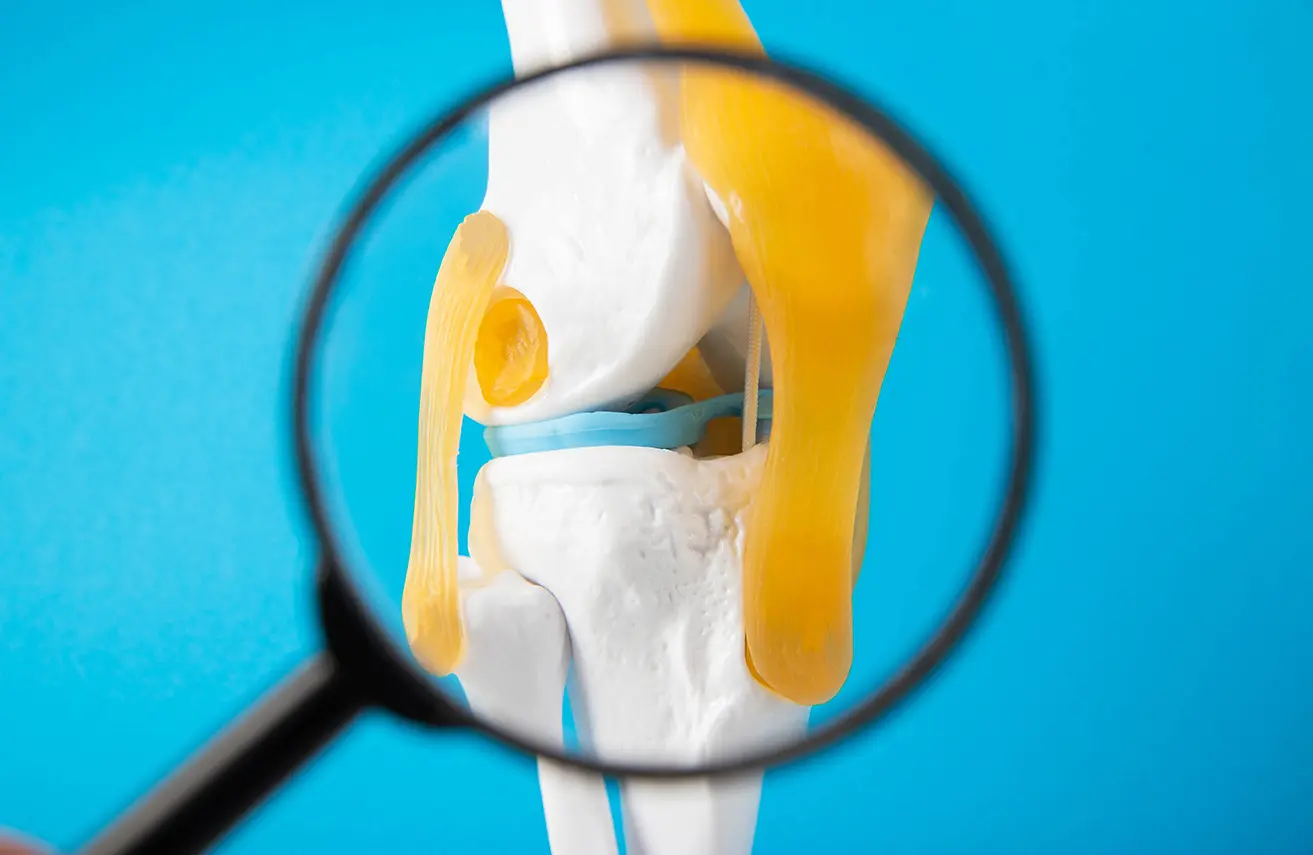
Every step, leap or jump you take is dependent on the layer of smooth cartilage within your knee. The articular
cartilage is one of the primary structures responsible for movement, serving as a protective layer that allows
your bones to rotate freely with minimal friction.
When this tissue becomes damaged, it can lead to discomfort, reduced mobility and long-term complications if not
addressed promptly. Minor knee cartilage damage may get better with conservative treatment. However, more severe
damage may eventually require knee cartilage repair treatment to properly restore the function and integrity of
the affected joint.
When Is Cartilage Repair Needed?
The decision to proceed with surgery is made after a thorough evaluation by a knee specialist. Generally, knee treatments are considered when an individual experiences:
- Persistent pain, swelling and other symptoms despite trying treatments such as rest, physiotherapy and anti-inflammatory medications
- Large cartilage defects or loose fragments within the damaged area
- Functional limitations affecting daily tasks, work or sports activities
- Cartilage defects that could lead to degenerative joint disease, like osteoarthritis
To confirm your candidacy for surgery, your knee specialist will use diagnostic tools, such as MRI scans to get a detailed view of the cartilage, X-rays to assess joint space and sometimes an arthroscopy to directly examine the damage.
Types of Knee Cartilage Repair Procedures
Since cartilage has no direct blood supply, it cannot heal well on its own. It is often necessary for a knee
surgeon to carry out a form of surgical knee treatment on the cartilage.
These surgeries are often performed using arthroscopy, a minimally invasive technique that uses small incisions
and a camera to view the joint. The appropriate procedure depends on factors such as defect size and location,
patient age, activity level and knee alignment.
Common procedures include:
Microfracture Surgery
Microfracture surgery involves creating small holes in the bone beneath the damaged cartilage. This stimulates the release of bone marrow cells, which form a clot and promote the growth of new, scar-like cartilage in the affected area.
Autologous Chondrocyte Implantation (ACI)
ACI is a two-stage procedure in which a small sample of healthy cartilage cells, known as chondrocytes, is first harvested. These cells are then cultured and later implanted into the cartilage defect to encourage the formation of new cartilage tissue.
Osteochondral Autograft Transplantation
This technique involves transferring small plugs of healthy cartilage and underlying bone from a non-weight-bearing area of the knee to the damaged site, restoring the joint surface with the patient’s own tissue.
Osteochondral Allograft Transplantation
Similar to an autograft, this procedure uses cartilage and bone tissue obtained from a donor. It is typically considered for larger cartilage defects where the patient’s own tissue is insufficient.
Mosaicplasty
Mosaicplasty is a variation of osteochondral grafting that uses multiple small cartilage and bone plugs to fill a larger defect, creating a patchwork or “mosaic” pattern over the damaged area.
Osteotomy
An osteotomy involves cutting and realigning the leg bones to redistribute weight away from the damaged portion of the knee. While it does not directly repair cartilage, it is often performed alongside cartilage procedures to improve long-term outcomes.
Knee Joint Replacement
When cartilage damage is extensive and associated with advanced joint degeneration, complete knee replacement may be considered. This procedure replaces the damaged joint surfaces with artificial implants to relieve pain and restore function.
What to Expect During Recovery and Rehabilitation
Recovery after knee cartilage repair is a gradual process that requires patience and commitment to a rehabilitation program. The specifics will depend on the type of surgery you have, but you can generally expect the following:
- Gradual Weight-Bearing and Mobility Exercises: You will likely use crutches for a period to keep weight off the repaired knee. A doctor or physiotherapist will guide you on when and how to start moving the joint.
- Physiotherapy: A tailored exercise plan can assist you in restoring strength in the muscles around your knee and restoring your full range of motion.
- Pain Management and Anti-Inflammatory Care: Your doctor will prescribe medication to manage post-operative pain and swelling. Applying ice and keeping the leg elevated may also help.
- Follow-up Appointments: Regular check-ups allow your surgeon to monitor your healing progress and adjust your rehabilitation plan as needed.
Full recovery can take several months, but with proper care and rehabilitation, many patients can return to their normal activities with less pain and improved knee function.
Resolving Damaged Knee Cartilage with a Knee Specialist in Singapore
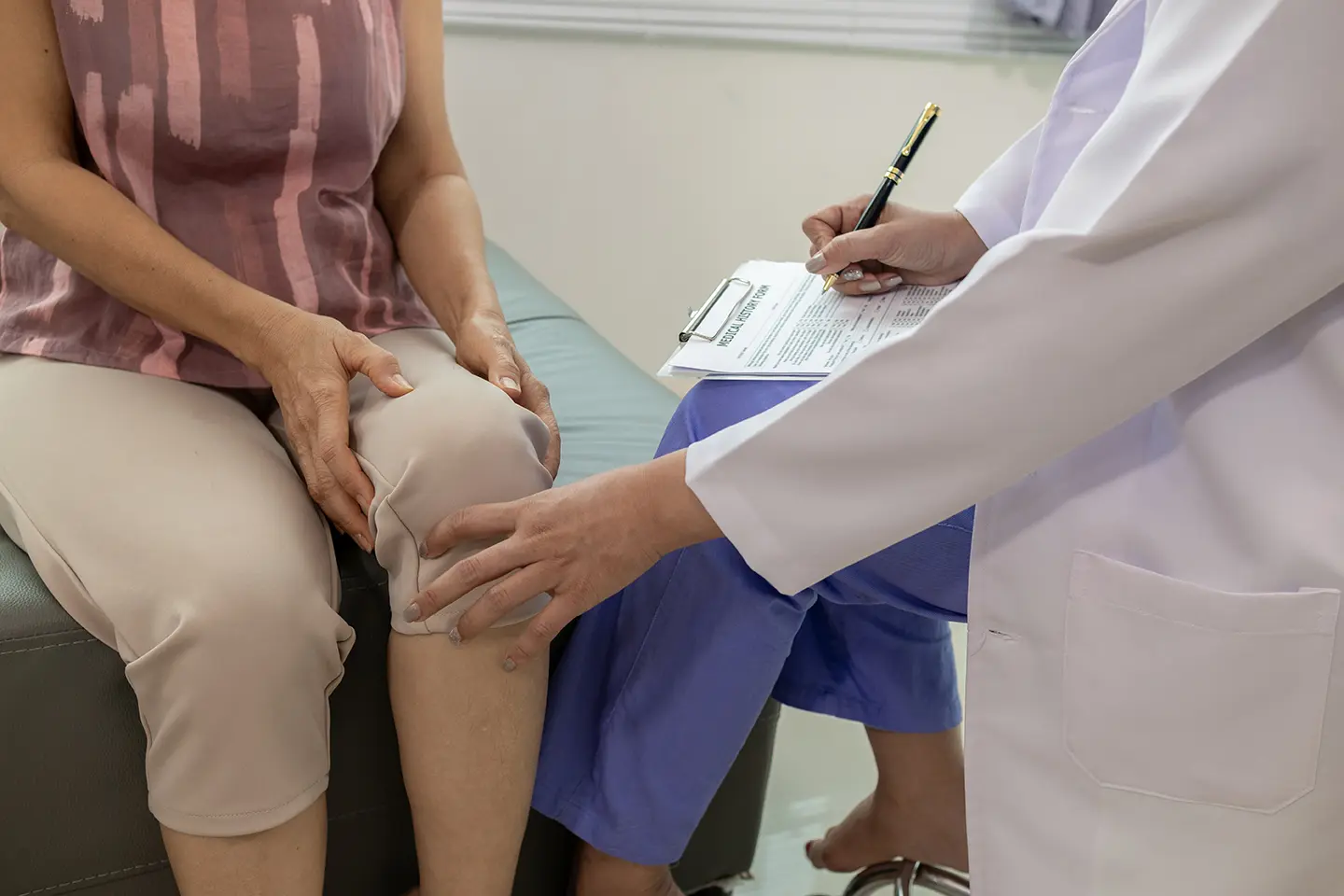
Damaged knee cartilage can progressively worsen if left untreated, leading to ongoing pain, swelling and reduced
joint function. As cartilage has limited natural healing ability, an early and accurate diagnosis is important
to prevent further deterioration and long-term complications such as arthritis.
A thorough evaluation by a knee specialist in Singapore allows the extent of cartilage injury to be properly
assessed. Timely intervention helps protect the joint surface, reduce symptoms and support long-term mobility.
At Axis Orthopaedic Centre, we provide evidence-based care for cartilage injuries and other complex knee
conditions. Led by Dr Seng Chusheng, our consultant orthopaedic surgeon, our clinic offers comprehensive knee
assessments and personalised treatment plans tailored to each patient’s condition and activity goals.
Contact us today to schedule a detailed knee evaluation and take the next step towards improved joint health.
About Dr Seng Chusheng
Dr Seng Chuseng is a consultant orthopaedic surgeon at Axis Orthopaedic Centre, specialising in foot and ankle
surgery and knee surgery. He obtained his MBBS and Master of Medicine in Orthopaedic Surgery from the National
University of Singapore and is a Fellow of the Royal College of Surgeons of Edinburgh.
Dr Seng trained at the Assal Centre in Geneva, Switzerland, focusing on complex foot and ankle deformities,
trauma and minimally invasive techniques. Before entering private practice, he served as a consultant
orthopaedic surgeon at Singapore General Hospital and continues as a visiting consultant there. His dedication
to patient care earned him the SingHealth Service With A Heart Award.
An active contributor to orthopaedic research, Dr Seng has published in peer-reviewed journals and was awarded
the Japanese Orthopaedic Association Travelling Fellowship.
At Axis Knee Pain Clinic, supporting our patients in their recovery and regaining of mobility is our top priority.
We warmly welcome patients with knee conditions from all walks of life to experience our customised treatment. Call us at 9711 8888 for a same-day or next-day consultation!
Contact Info

Mount Elizabeth Novena Medical Centre
38 Irrawaddy Road, #06-33Singapore 329563
Parkway East Medical Centre
319 Joo Chiat Place, #04-08,Singapore 427989
Mount Alvernia
Medical Centre A
820 Thomson Road, #03-08,Singapore 574623

Telephone



Operating Hours
| Mon - Fri | : | 8:30am - 5:30pm |
| Sat | : | 8:30am - 12:30pm |
| Sunday & PH : Closed | ||