
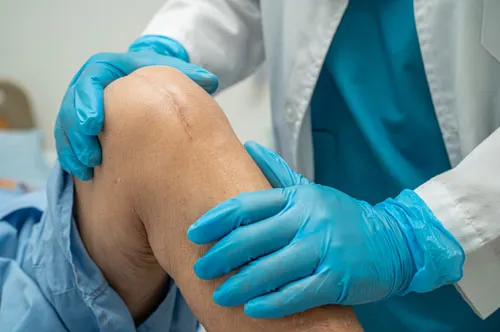
Consult Dr Seng if conservative treatment no longer provides adequare relief for your knee pain.

MBBS (Singapore), MRCS (Edinburgh), MMed (Orth), FRCS (Edinburgh)
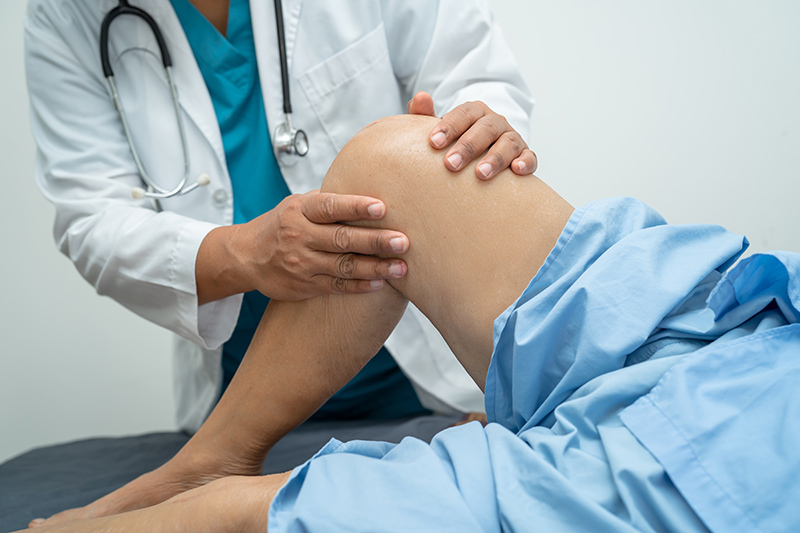
Chronic knee pain can make everyday activities, such as walking or climbing stairs, increasingly uncomfortable. For some people, knee pain and stiffness may also interfere with sleep, work and other daily activities.
Non-surgical treatments are usually considered first and may include medication, physiotherapy, activity modification and lifestyle changes. However, these measures may not provide sufficient relief when knee joint damage becomes severe.
When persistent knee pain and reduced mobility significantly affect quality of life despite appropriate non-surgical treatment, total knee replacement may be considered.
What Is Total Knee Replacement?
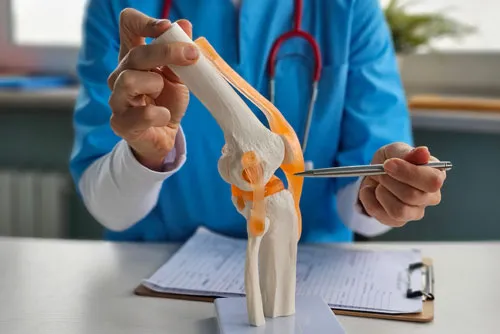
The knee joint is formed by the femur (thigh bone), tibia (shin bone) and patella (kneecap). The ends of these bones are covered by cartilage, which helps the joint move smoothly.
Conditions such as osteoarthritis can gradually damage this cartilage. As the condition progresses, some people may develop persistent pain, stiffness, swelling, reduced mobility or changes in the shape of the knee.
Total knee replacement surgery, also known as total knee arthroplasty, is a procedure in which damaged joint surfaces are removed and replaced with artificial components. These components are designed to create new joint surfaces, with the aim of reducing pain and improving knee function.
Who May Need Total Knee Replacement?
Total knee replacement may be considered when knee joint damage causes persistent symptoms that significantly interfere with daily activities and quality of life. A specialist will assess factors such as the severity of symptoms, the extent of joint damage, overall health and response to previous treatments before recommending surgery.
People who may be considered for total knee replacement include those with:
- Severe osteoarthritis: Advanced wear of the knee joint that causes persistent pain, stiffness or significant difficulty with everyday activities.
- Inflammatory arthritis: Conditions such as rheumatoid arthritis that can progressively damage the knee joint.
- Arthritis after an injury: Joint damage that develops following a previous knee injury or fracture.
- Significant stiffness or reduced function: Knee problems that substantially limit walking, movement or other routine activities.
Total knee replacement is not automatically required because arthritis is visible on an X-ray or scan. The decision to undergo surgery is based on the individual's symptoms, examination findings, imaging results, general health and treatment goals.
How to Prepare for Total Knee Replacement Surgery
Preparation before knee replacement surgery can help patients understand what to expect and identify medical or practical issues that may affect recovery.
Before surgery, patients typically undergo a pre-operative assessment to determine whether they are medically fit for the procedure. Depending on the individual's health and medical history, this may include blood tests, diagnostic imaging and a review of existing medical conditions and medications.
Some medicines may need to be adjusted before surgery. Patients should follow their doctor's instructions and should not stop prescribed medication without medical advice.
Other aspects of preparation may include:
- Managing body weight: Where appropriate, maintaining a healthy weight may help reduce stress on the knee and support overall health before and after surgery.
- Exercise before surgery: A physiotherapist or specialist may recommend exercises to maintain or improve strength and movement before the operation.
- Planning support at home: Patients may need assistance with household tasks, transport and other daily activities during the early stages of recovery.
- Preparing the home: Removing trip hazards and arranging frequently used items within easy reach can help make movement around the home safer after surgery.
What Happens During Total Knee Replacement Surgery?
Total knee replacement is generally performed under general or spinal anaesthesia. The duration of surgery varies according to the individual patient and surgical approach, but the operation commonly takes around one to two hours.
The main stages include:
Removing the Damaged Joint Surfaces
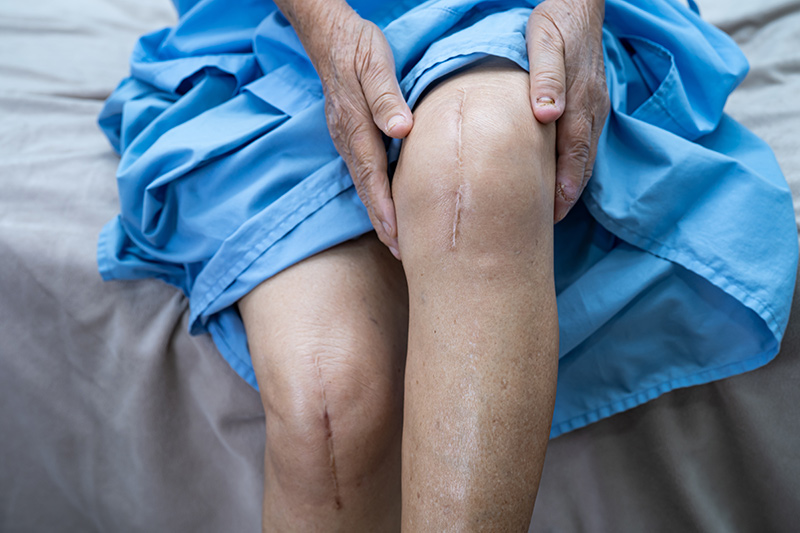
The orthopaedic surgeon makes an incision over the knee to access the joint. Damaged cartilage and a small amount of underlying bone are removed from the affected joint surfaces of the femur and tibia. Depending on the surgical approach and condition of the joint, the patella may also be treated.
Positioning the Implants
Artificial components are positioned on the prepared surfaces of the knee. A spacer is typically placed between the metal components to allow the joint surfaces to move against each other. The surgeon assesses the alignment, stability and movement of the knee before completing the procedure.
Closing the Incision and Initial Recovery
Once the implants have been positioned and the knee has been checked, the incision is closed and a dressing is applied. The patient is then transferred to a recovery area, where the clinical team monitors their condition as the effects of anaesthesia wear off.
Recovery After Total Knee Replacement
Recovery after total knee replacement varies between individuals. Factors such as age, general health, physical condition before surgery and adherence to rehabilitation can influence the pace of recovery.
Rehabilitation usually begins soon after surgery and continues as the patient gradually returns to everyday activities.
Hospital Stay and Early Recovery
The length of hospital stay varies depending on the patient's condition, progress and the care pathway used by the hospital.
During the initial recovery period, the clinical team monitors pain, the surgical wound and general health. Patients are usually encouraged to begin moving the knee and walking with assistance relatively soon after surgery, when medically appropriate.
A physiotherapist may guide patients through exercises and teach them how to use walking aids safely.
Rehabilitation and Physiotherapy
Rehabilitation is an important part of recovery after total knee replacement. Physiotherapy may focus on improving knee movement, strengthening the muscles around the joint and gradually improving balance and walking ability.
The rehabilitation programme is adjusted according to the patient's progress, symptoms and individual needs. Patients may continue exercises independently or with guidance from a physiotherapist after leaving hospital.
Following the prescribed rehabilitation programme can help patients work towards regaining strength and function.
Returning to Normal Activities
The time required to return to everyday activities varies. Some patients may gradually resume routine activities over several weeks, while others require a longer recovery period.
Walking and other low-impact activities are generally introduced progressively. Returning to work depends on factors such as the nature of the job and the individual's recovery.
Driving, swimming, cycling and other activities should only be resumed when sufficient strength and control have returned and the treating specialist considers it appropriate.
Patients should follow individual advice from their surgeon and physiotherapist rather than relying on a fixed recovery timeline.
Potential Risks and Considerations of Total Knee Replacement
As with any major operation, total knee replacement carries potential risks and complications. The likelihood of these varies depending on factors such as age, general health and existing medical conditions. Your orthopaedic surgeon will discuss these with you in detail before surgery so you can make an informed decision.
Possible risks include:
- Infection
- Blood clots
- Persistent pain or stiffness
- Implant wear or loosening
- Nerve or blood vessel injury
- Anaesthetic and medical complications
Dr Seng applies his extensive orthopaedic experience to carefully assess each patient's condition, plan surgery with precision, and guide treatment decisions in a way that helps minimise risks while ensuring patients are fully informed and supported throughout the process.
Total Knee Replacement Care with Dr Seng Chusheng
Total knee replacement may help reduce pain and improve mobility and function in appropriately selected patients with advanced knee joint damage. However, surgery is not necessary for everyone with knee arthritis, and treatment should be based on the severity of symptoms, clinical findings and individual needs.
At Axis Knee Pain Clinic, patients are assessed to determine the cause and severity of their knee symptoms before treatment options are considered. Our specialist, Dr Seng Chusheng, and his team offer the comprehensive expertise needed to guide you through every stage of the surgical journey, from pre-operative planning to long-term joint care.
If conservative knee treatments are no longer providing sufficient relief for your knee pain, contact us today to schedule a consultation and explore your options for mobility restoration.
FAQs About Total Knee Replacement
How do I know if I need a total knee replacement?
Knee replacement may be considered when severe knee pain, stiffness or loss of function significantly affects daily activities and appropriate non-surgical treatments no longer provide sufficient relief. Your orthopaedic surgeon will assess your symptoms, knee function, imaging findings, general health and treatment goals before determining whether surgery is appropriate.
How long does it take to recover from total knee replacement?
Recovery varies between patients. Walking and rehabilitation generally begin relatively soon after surgery, with activities gradually increased as strength and knee movement improve. Some people return to many routine activities within several weeks, while recovery of strength and function can continue for several months.
Will I be able to walk after knee replacement surgery?
Patients are generally encouraged to begin standing and walking with assistance when medically appropriate after surgery. Walking aids, such as a walking frame or crutches, may initially be required. The amount of assistance needed and the pace of progression vary between individuals.
Is total knee replacement painful?
Pain and discomfort are expected after knee replacement surgery, particularly during the early recovery period. The clinical team will provide a pain-management plan, which may include medication and other approaches. Pain generally changes as healing progresses, but individual experiences vary.
Can I exercise after a total knee replacement?
Physical activity is generally encouraged as recovery progresses, but activities should be introduced gradually and according to advice from your surgeon or physiotherapist. Low-impact activities, such as walking, swimming and cycling, may be suitable for many patients once sufficient recovery has occurred.

Dr Seng Chusheng
Senior Consultant Orthopaedic Surgeon (Sports & Exercise Medicine)
MBBS (Singapore), MRCS (Edinburgh), MMed (Orth), FRCS (Edinburgh)
Dr Seng Chusheng is an orthopaedic surgeon with a clinical focus on knee conditions, orthopaedic trauma, sports injuries and reconstructive surgery. He obtained his MBBS and MMed (Orthopaedic Surgery) from the National University of Singapore and is a Fellow of the Royal College of Surgeons of Edinburgh (Orthopaedic Surgery).
His practice focuses on the assessment and management of musculoskeletal conditions. Treatment may involve both non-surgical and surgical approaches, with decisions guided by clinical findings and current evidence.
At Axis Knee Pain Clinic, supporting our patients in their recovery and regaining of mobility is our top priority.
We warmly welcome patients with knee conditions from all walks of life to experience our customised treatment. Call us at 9711 8888 for a same-day or next-day consultation!
Contact Info

Mount Elizabeth Novena Medical Centre
38 Irrawaddy Road, #06-33Singapore 329563
Parkway East Medical Centre
319 Joo Chiat Place, #04-08,Singapore 427989
Mount Alvernia
Medical Centre A
820 Thomson Road, #03-08,Singapore 574623

Telephone



Operating Hours
| Mon - Fri | : | 8:30am - 5:30pm |
| Sat | : | 8:30am - 12:30pm |
| Sunday & PH : Closed | ||