
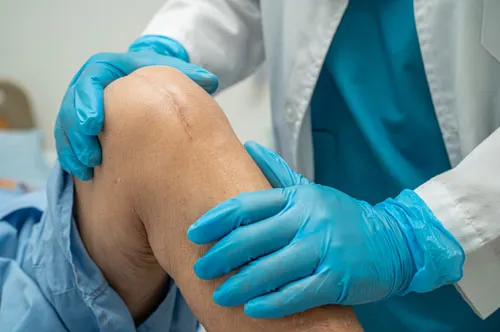
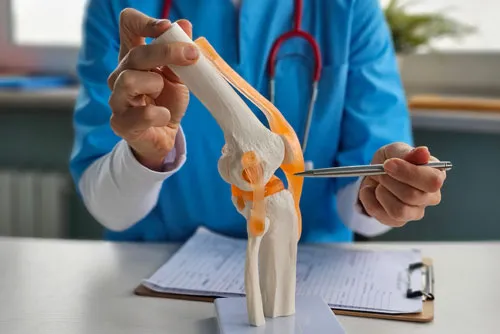
Consult Dr Seng if conservative treatment no longer provides adequare relief for your knee pain.

MBBS (Singapore), MRCS (Edinburgh), MMed (Orth), FRCS (Edinburgh)
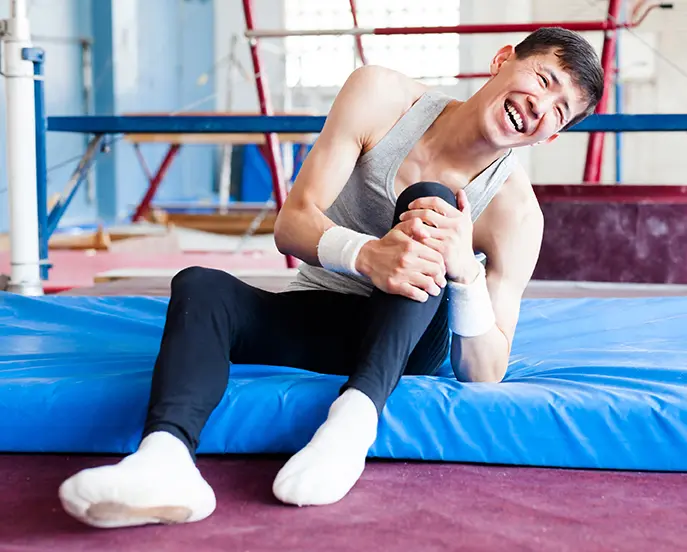
The tendons in your knee are responsible for connecting the muscles to your bones, providing stability and enabling you to move. These tendons are under constant strain, and when they are stretched too far, they may experience a tear. This can be extremely painful, disrupting normal joint function and making even simple activities a challenge.
Individuals with tendon tears often experience pain, instability and reduced independence in daily routines. Left untreated, a knee tendon tear can significantly affect your mobility and quality of life. Understanding how these injuries occur is an important first step towards timely diagnosis and appropriate treatment.
What Are the Common Causes of Knee Tendon Tears?
Knee tendon tears occur when the tendon is stretched beyond its capacity, leading to a partial or complete tear. The two most commonly affected tendons are the quadriceps tendon (connecting the thigh muscle to the kneecap) and the patellar tendon (connecting the kneecap to the shinbone).
Several factors can contribute to these injuries, including:
- Sports-Related Injuries: High-impact activities that involve forceful movements, such as jumping, running, sudden stops or direction changes, can place significant stress on the knee tendons.
- Accidents or Falls: A direct blow to the front of the knee from a hard fall or a motor vehicle collision can cause a tendon to tear. Lacerations that cut through the skin and into the tendon can also lead to a complete tear.
- Age-Related Degeneration: As we get older, our tendons naturally weaken. The blood supply to the tendons decreases, and the collagen fibres that make up the tendon can degenerate, making them more susceptible to injury.
- Overuse or Repetitive Strain: Repetitive strain from activities that put continuous stress on the knee, such as squatting or kneeling, may lead to inflammation (tendonitis). Leaving it untreated can weaken the tendon and increase the risk of a tear.
- Other Risk Factors: A torn knee tendon may occur due to poor physical conditioning, chronic diseases like rheumatoid arthritis, and a history of knee problems or prior surgeries.
Signs and Symptoms of a Torn Knee Tendon
Symptoms of a knee tendon tear often appear immediately and signal the need for prompt assessment. Commonly recognisable signs and symptoms include:
- A popping or tearing sensation at the moment of injury
- Bruising around the knee joint
- Sharp, severe pain and swelling at the front of the knee, either just above or below the kneecap
- Difficulty straightening the leg or an inability to lift the straight leg off the ground
- Weakness or instability in the knee, particularly when trying to stand or bear weight
- A visible gap or indentation where the tendon has torn
- A kneecap that appears to be in a higher or lower position than usual
If you experience these symptoms, it is advisable to have your knee evaluated by a specialist. An early assessment may be able to prevent the injury from worsening or developing into permanent damage.
How Is a Torn Knee Tendon Diagnosed?
Assessment begins with a detailed discussion of symptoms and how the injury occurred. The knee doctor will then
examine the knee for swelling, tenderness and any visible deformity.
Imaging studies, such as ultrasound or MRI, are often used to confirm the diagnosis and determine whether the
tear is partial or complete. These findings help guide the treatment approach, including whether non-surgical
management or surgical repair is more appropriate.
Treatment and Rehabilitation for Torn Knee Tendons
Recovery for general knee injuries often involves the RICE method (rest, ice, compression and elevation) and nonsteroidal anti-inflammatory medications to help manage pain and swelling.
For complete knee tendon tears, further knee treatment is generally necessary, including surgical intervention. This often involves a direct tendon repair where the surgeon reattaches the torn tendon to the bone to restore the knee's structural integrity and support. In certain situations, a minimally invasive procedure called arthroscopy may be performed, allowing for the repair of the injured tendon through small incisions.
Following surgery, the knee will be immobilised to protect the repair. Physiotherapy will begin soon after, starting with gentle exercises and gradually progressing to more intensive strengthening and flexibility training.
Full recovery can take several months. While many patients start walking without crutches within a few weeks, returning to more strenuous activities and sports can take 4–6 months or longer.
Resolving a Torn Knee Tendon at a Knee Specialist Clinic
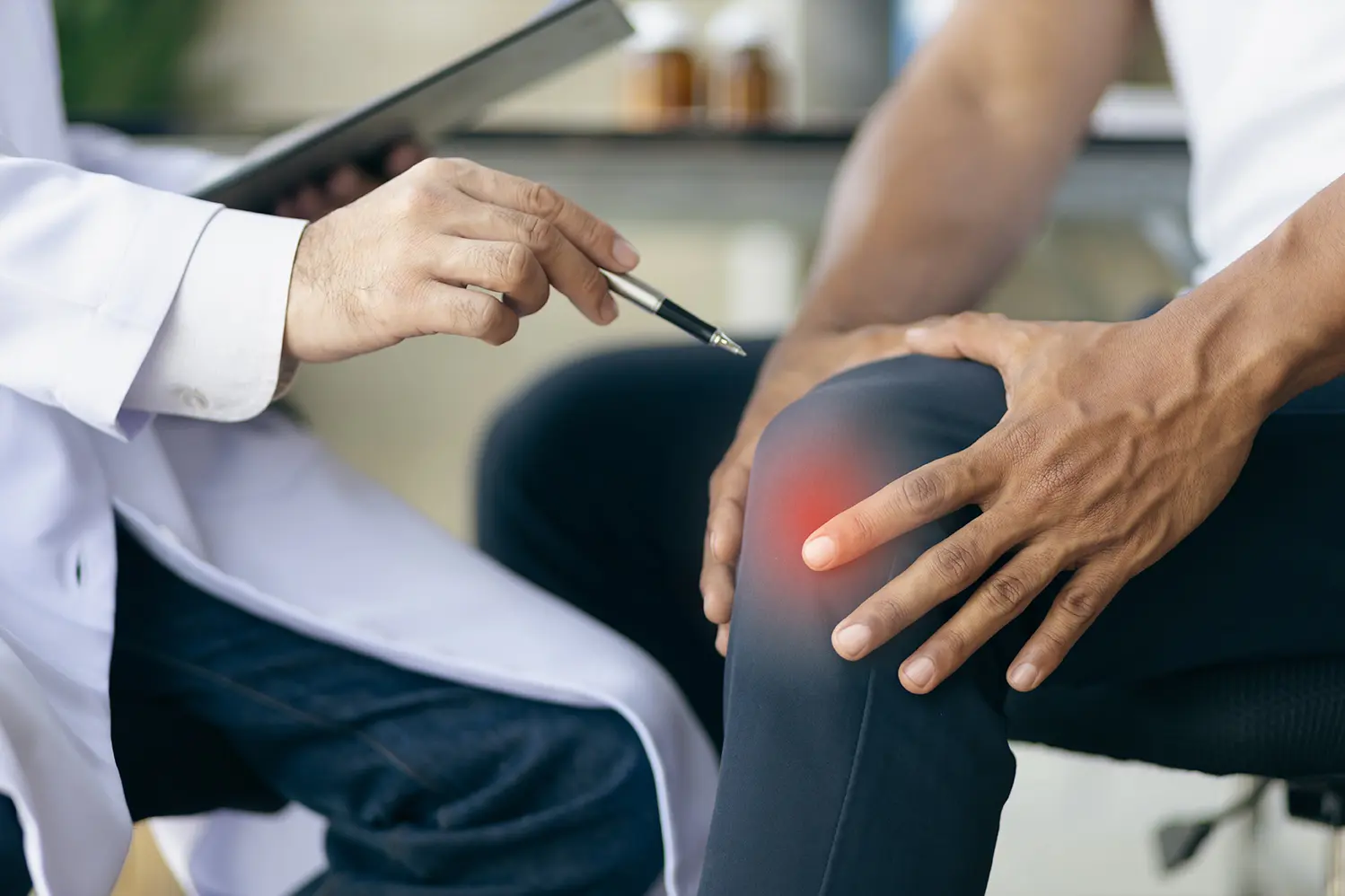
A torn knee tendon can significantly affect your ability to walk, climb stairs or return to sports and work. As complete tendon tears often require timely surgical repair, early assessment by a knee specialist is important to restore stability and prevent long-term weakness or loss of function.
Accurate diagnosis allows the severity of the tear to be determined and guides the most appropriate knee pain treatment. Management may range from bracing and physiotherapy for partial tears to surgical repair for complete ruptures. A structured rehabilitation plan is essential to help regain strength, flexibility and confidence in movement.
At Axis Orthopaedic Centre, our knee clinic provides evidence-based care for tendon injuries and other complex knee conditions. Led by Dr Seng Chusheng, consultant orthopaedic surgeon, our practice focuses on thorough assessment, clear diagnosis and personalised treatment planning tailored to each individual’s recovery goals.
Contact us today to schedule a consultation with a knee specialist and begin your recovery with a structured treatment plan.
About Dr Seng Chusheng
Dr Seng Chuseng is a consultant orthopaedic surgeon at Axis Orthopaedic Centre, specialising in foot and ankle
surgery and knee surgery. He obtained his MBBS and Master of Medicine in Orthopaedic Surgery from the National
University of Singapore and is a Fellow of the Royal College of Surgeons of Edinburgh.
Dr Seng trained at the Assal Centre in Geneva, Switzerland, focusing on complex foot and ankle deformities,
trauma and minimally invasive techniques. Before entering private practice, he served as a consultant
orthopaedic surgeon at Singapore General Hospital and continues as a visiting consultant there. His dedication
to patient care earned him the SingHealth Service With A Heart Award.
An active contributor to orthopaedic research, Dr Seng has published in peer-reviewed journals and was awarded
the Japanese Orthopaedic Association Travelling Fellowship.
At Axis Knee Pain Clinic, supporting our patients in their recovery and regaining of mobility is our top priority.
We warmly welcome patients with knee conditions from all walks of life to experience our customised treatment. Call us at 9711 8888 for a same-day or next-day consultation!
Contact Info

Mount Elizabeth Novena Medical Centre
38 Irrawaddy Road, #06-33Singapore 329563
Parkway East Medical Centre
319 Joo Chiat Place, #04-08,Singapore 427989
Mount Alvernia
Medical Centre A
820 Thomson Road, #03-08,Singapore 574623

Telephone



Operating Hours
| Mon - Fri | : | 8:30am - 5:30pm |
| Sat | : | 8:30am - 12:30pm |
| Sunday & PH : Closed | ||